
 Image 1 of 4
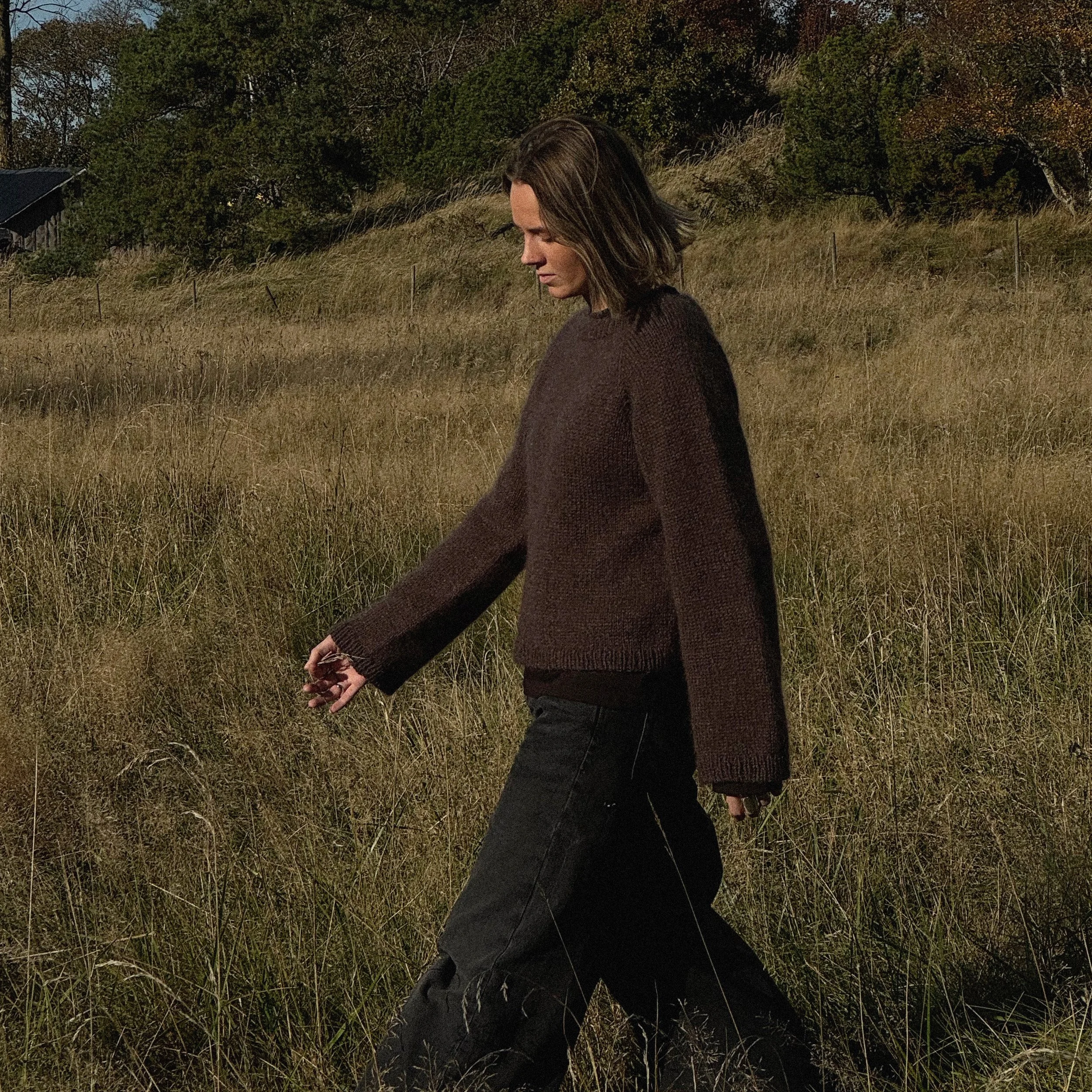 Image 2 of 4
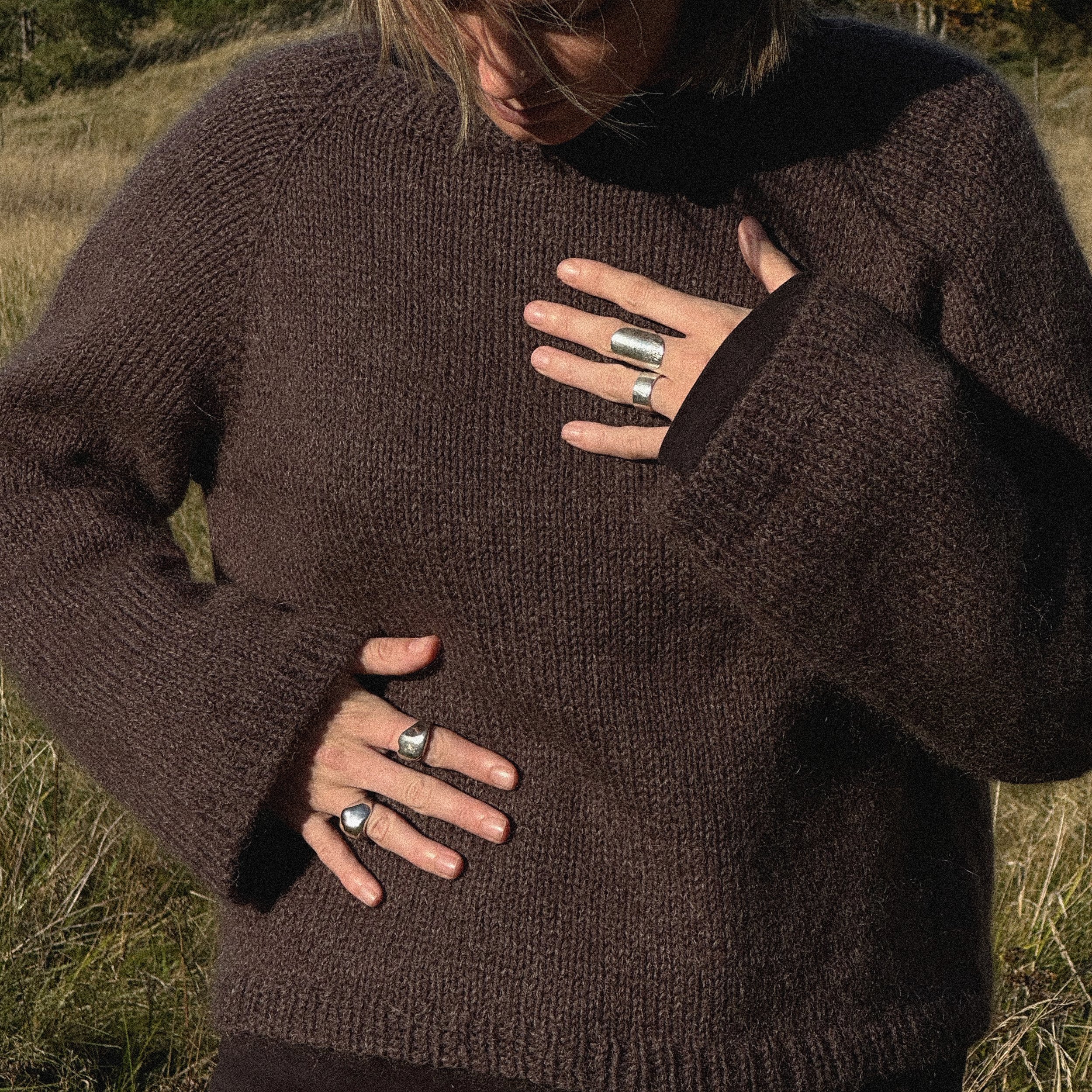 Image 3 of 4
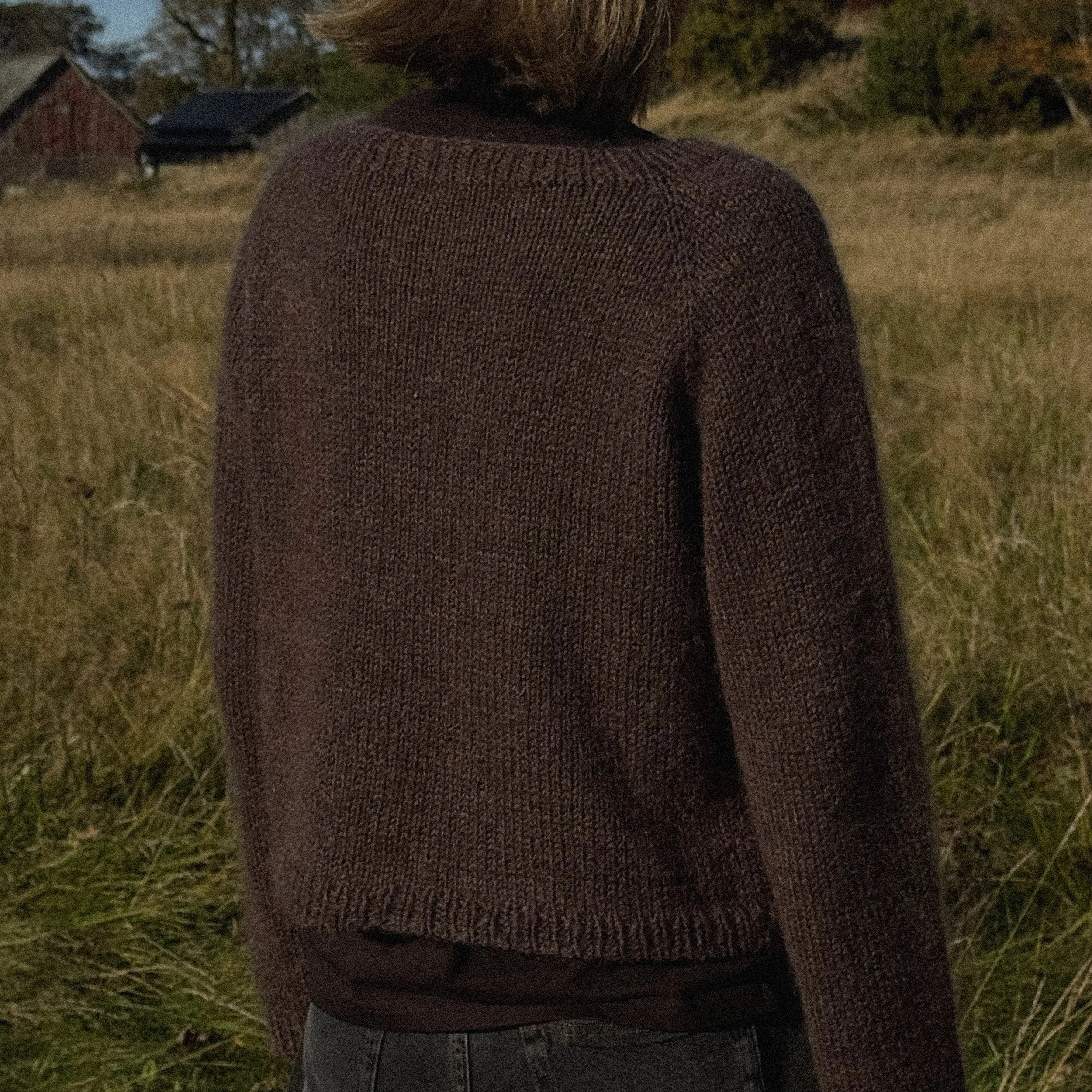 Image 4 of 4
This knitting pattern is in English.
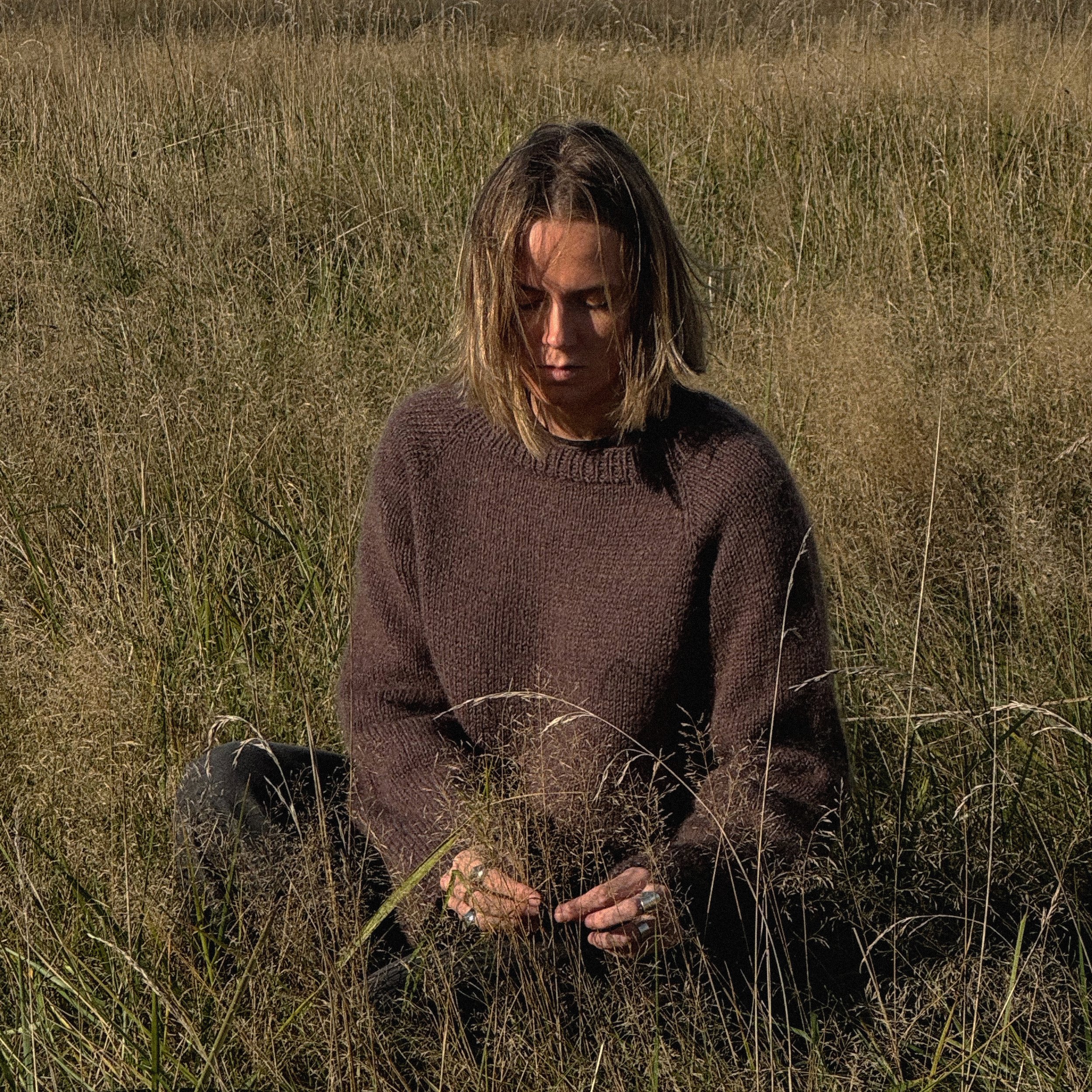
Bear is the Sweater with a capital S. It has a classic, timeless design that will always have a place in your wardrobe. The sweater is knit top-down with unique raglan stitches that highlight the increases. A short rib follows the width of the stockinette stitch to create a straight and minimalist silhouette. The techniques are simple, making the pattern beginner-friendly.
When purchasing the pattern, it will be sent as a PDF to your specified email address.
Sizes:
(XS) S (M) L (XL)
Measurements:
Gauge shoulder width (10 cm from neckline): (170) 180 (190) 200 (214) cm
Gauge from the underarm and down: (100) 106 (112) 118 (126) cm
Length: (51) 52 (53) 54 (56) cm
Gauge:
15 sts x 21 rounds = 10 x 10 cm on 4 mm needles, measured in stockinette stitch after blocking.
If you choose a different yarn, note that the recommended yarn has a relatively wide gauge compared to other yarns of the same weight/yardage.
Needles:
3 mm circular needle, 40 cm
4 mm circular needle, 40 cm
4 mm circular needle, 80 cm
Yarn:
(500) 500 (500) 550 (550) g Karisma from DROPS (100% Wool, 50 g/ 100 m)
(125) 125 (125) 150 (150) g Kid-Silk Mohair from DROPS (75% Kid mohair, 25% Silk, 25 g/ 210 m)
The brown Bear is knitted with the colours Karisma 56 Dark brown mix and Kid Silk 15 Dark brown.
Additional material:
Several stitch markers
Stitch holders or extra yarn
Size guide:
The sizes for Bear correspond to standard European sizes. The sizes (XS) S (M) L (XL) fit a bust measurement of: (80–85) 85–90 (90–95) 95–100 (100–110) cm. Allow for a positive ease of 19–29 cm.
Ex: If your bust measures 87 cm (or the widest part of your body), you should knit size S. A size S sweater has a circumference of 106 cm, giving a positive ease of 19 cm.
For size XL, the positive ease increases proportionally.
Ex: If your bust measures 105 cm, you would knit size XL. A size XL sweater has a circumference of 129 cm, giving a positive ease of 24 cm.
The model is 167 cm tall and is wearing size S.
Tutorial for raglan increases can be found at the bottom of this page.
This knitting pattern is in English.
Bear is the Sweater with a capital S. It has a classic, timeless design that will always have a place in your wardrobe. The sweater is knit top-down with unique raglan stitches that highlight the increases. A short rib follows the width of the stockinette stitch to create a straight and minimalist silhouette. The techniques are simple, making the pattern beginner-friendly.
When purchasing the pattern, it will be sent as a PDF to your specified email address.
Sizes:
(XS) S (M) L (XL)
Measurements:
Gauge shoulder width (10 cm from neckline): (170) 180 (190) 200 (214) cm
Gauge from the underarm and down: (100) 106 (112) 118 (126) cm
Length: (51) 52 (53) 54 (56) cm
Gauge:
15 sts x 21 rounds = 10 x 10 cm on 4 mm needles, measured in stockinette stitch after blocking.
If you choose a different yarn, note that the recommended yarn has a relatively wide gauge compared to other yarns of the same weight/yardage.
Needles:
3 mm circular needle, 40 cm
4 mm circular needle, 40 cm
4 mm circular needle, 80 cm
Yarn:
(500) 500 (500) 550 (550) g Karisma from DROPS (100% Wool, 50 g/ 100 m)
(125) 125 (125) 150 (150) g Kid-Silk Mohair from DROPS (75% Kid mohair, 25% Silk, 25 g/ 210 m)
The brown Bear is knitted with the colours Karisma 56 Dark brown mix and Kid Silk 15 Dark brown.
Additional material:
Several stitch markers
Stitch holders or extra yarn
Size guide:
The sizes for Bear correspond to standard European sizes. The sizes (XS) S (M) L (XL) fit a bust measurement of: (80–85) 85–90 (90–95) 95–100 (100–110) cm. Allow for a positive ease of 19–29 cm.
Ex: If your bust measures 87 cm (or the widest part of your body), you should knit size S. A size S sweater has a circumference of 106 cm, giving a positive ease of 19 cm.
For size XL, the positive ease increases proportionally.
Ex: If your bust measures 105 cm, you would knit size XL. A size XL sweater has a circumference of 129 cm, giving a positive ease of 24 cm.
The model is 167 cm tall and is wearing size S.
Tutorial for raglan increases can be found at the bottom of this page.